
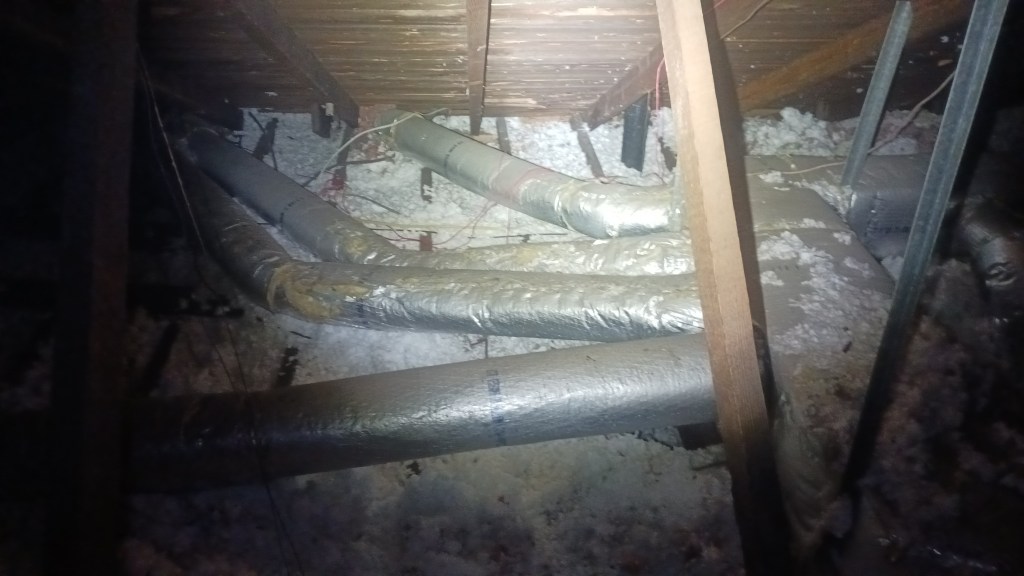
As a home inspector, people are always asking what is my least favorite thing is to inspect. Most people assume it is the crawlspace, after all, they are filled with mold, spiders, and who knows what else. This is a good guess, but during the summer months, the worst place to inspect is that attic.
A well-ventilated and insulated attic is expected to be about 20 degrees hotter than the outside temperature. That means in the south on a hot summer day that best case scenario is that it is somewhere in the 110s. I have been in attics without any meaningful ventilation that have been over 155 degrees. While these temperatures are unpleasant and, in some cases, dangerous to be in, you may be thinking to yourself, “So what? Hot attics don’t affect me.”
That heat doesn’t just stay up there. A hot attic can raise the temperature in your entire home, strain your air conditioning system, lead to higher energy bills, and shorten the lifespan of your roof. Whether you use your attic for storage or as a living space, keeping it cool is key to maintaining comfort and efficiency.
Here are a few easy and practical things you to do bring down attic temperatures.
1. Improve Attic Ventilation
Attic ventilation works by creating a natural flow of air through the attic space, which helps remove hot, moist, or stale air and replaces it with cooler, fresher air from outside. This flow reduces heat buildup in the summer and prevents moisture problems in the winter.
Here’s how it works:
Basic Principle: Air In, Air Out
Attic ventilation relies on a simple system of intake and exhaust vents to promote air circulation:
1. Intake Vents (usually at the bottom)
These are typically located in the soffits (the underside of the eaves). They allow cooler outside air to enter the attic.
2. Exhaust Vents (at the top)
These are installed near the roof ridge or gable ends, and they allow hot air to escape. Because hot air rises, it naturally moves up and out through these vents.
This setup creates a convection current—cool air enters low and pushes hot air out high.
| Vent Type | Purpose | Location |
| Soffit vents | Intake | Under the eaves |
| Ridge vents | Exhaust | Along the roof peak |
| Gable vents | Intake or exhaust | On the gable ends |
| Roof vents (box or turtle vents) | Exhaust | Near the ridge line |
| Attic fans | Exhaust (powered) | Mounted on roof or gable |
| Solar fans | Exhaust (solar-powered) | Same as above |
2. Insulate Effectively
Insulation doesn’t just keep your home warm in the winter—it also helps keep the heat out in the summer. This will not keep your attic cooler but it will help keep your house cooler making life easier on your HVAC system and your wallet.
Adding insulation can be a DIY project saving you money.
Batt insulation comes in rolls and can be easily installed between your homes ceiling joists on the attic floor.
If your house has blown insulation in it, more can be easily added. Many home improvement stores will include a free rental of an insulation blower with the purchase of blown insulation.
3. Install a Radiant Barrier
A radiant barrier is a reflective layer (often made of aluminum foil and look like something you would see on the international space station) that can be installed on the underside of your roof.
This barrier will reflect the heat instead of absorbing it. Depending on the thickness of the barrier in can lower the temperature in the attic between 10-30°F
Final Thoughts
A cooler attic isn’t just about comfort—it’s about energy efficiency, protecting your roof, and reducing wear on your HVAC system. With the right combination of ventilation, insulation, and smart upgrades, you can transform your attic from a sweltering heat trap into a well-regulated space.
Whether you DIY or hire a professional, these changes can help you stay cool and save money all summer long.

 Advanced Home Inspection
Leave a reply to Eric Wheeler Cancel reply